

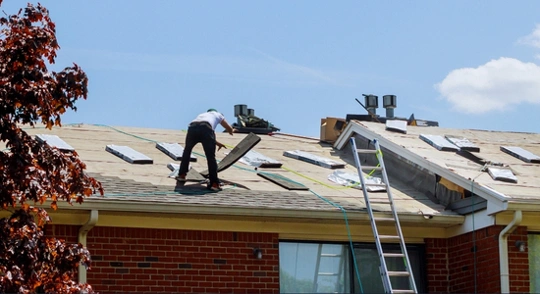

You are halfway up a ladder trying to finish one more task. Or you are doing roof work early in the day, moving fast because the job has to get done. Then the ladder shifts, a foot slips, a guardrail is missing, or a roof opening is not protected. One second later, you are on the ground, hurt, confused, and wondering what happens next.
That is when people start asking the same questions. Will workers’ comp cover medical bills? Can you get wage replacement if you miss work? What if the employer says the ladder fall injury was your fault? What if a defective ladder or another subcontractor contributed to the fall?
In California, workers’ compensation generally covers injuries that arise out of and happen in the course of employment. The state says injured workers can receive benefits no matter who was at fault in most cases, and those benefits can include medical care, temporary disability, permanent disability, supplemental job displacement benefits, and death benefits. The employer must also carry workers’ compensation insurance even if it has only one employee.
For injured workers, that matters. Falls from ladders and roofs can cause broken bones, fracture injuries, concussion symptoms, traumatic brain injuries, skull fractures, spinal damage, and other serious injuries that do not heal in a week or two. In the construction industry, fall hazards remain one of the biggest safety problems, especially around ladders, scaffolds, skylights, roof edges, and floor or roof openings.
Understanding how workers’ compensation covers falls from ladders and roofs early can make a real difference. Good reporting, clean medical records, and quick action can help protect compensation benefits before the paperwork problems start.
Common Causes of Ladder and Roof Falls in Workers’ Compensation Claims
A lot of falls on construction sites and other worksites happen for ordinary reasons. But ordinary does not mean harmless.
Common causes include a defective ladder, the wrong ladder for the job, poor ladder setup, unstable ground, missing fall protection, unguarded skylights, weak roof surfaces, rushed work, poor inspection habits, slippery surfaces, and unsafe instructions from a supervisor or general contractor. Cal/OSHA rules require protection for many roof openings and skylights, and California guidance also lays out fall protection requirements for different kinds of roofing and elevated work.
That means a workplace fall is not always just a random accident. Sometimes the worksite was unsafe. Sometimes ladders must be inspected and replaced but were not. Sometimes a subcontractor created the hazard. Sometimes the equipment itself had design defects. Those details may not change whether workers’ compensation applies, but they can affect whether there are other legal options too.
What Types of Compensation Can You Seek After a Ladder or Roof Fall at Work
Most people want a straight answer here. What does workers’ comp actually pay for after a fall at work?
California’s system provides several kinds of compensation coverage. Medical care can include doctor visits, hospital care, imaging, surgery, medication, and therapy that is reasonable and necessary for the work injury. Temporary disability benefits may apply if the injury keeps you from doing your usual job for more than three days, or if you are hospitalized overnight.
Those payments generally equal two-thirds of lost gross wages, subject to legal limits. Permanent disability benefits may apply if the fall injuries leave lasting problems or permanent disabilities. A supplemental job displacement voucher may be available if you cannot return to your old job and the legal conditions are met. In fatal falls, eligible dependents may receive death benefits.
So if you were injured on the job in a ladder fall at work or roof fall at work, the possible recovery may include medical expenses, wage replacement, and longer-term compensation tied to the severity of the injury. Workers’ compensation does not usually include pain and suffering against the employer in the comp claim itself, but it can still provide major help with medical costs and lost income.
What Steps Should You Take Immediately After a Ladder or Roof Fall at Work
The first hours matter more than many workers realize. Get emergency care if you need it. Report the accident to your employer as soon as possible. Ask for the DWC-1 claim form. California says you could lose the right to workers’ compensation benefits if you do not report the injury within 30 days, and the employer is supposed to give or mail you a claim form within one working day after learning about the injury.
Then be specific. List every injured body part, not just the worst one. Head injuries, head trauma, concussion symptoms, shoulder pain, numbness, back pain, spinal symptoms, and knee pain all need to be documented.
Keep copies of claim paperwork, discharge papers, work restrictions, prescriptions, and photos from the worksite if they are available. If a ladder, scaffold, guardrail, or skylight condition contributed to the fall, note that too.
How Long Do You Have to Report a Ladder or Roofing Injury
This point deserves its own section because late reporting causes real damage. In California, an injured worker should report a work injury to the employer within 30 days. Reporting sooner is better. The state also says the employer must provide the claim form within one working day after learning of the injury. Once the form is filed, the employer must complete its section, give the worker a dated copy, and send the form to the claims administrator.
So yes, timing matters. A strong injury case often starts with prompt notice, not with a later argument.
Can I Choose My Own Doctor for Treatment?
Sometimes yes, but not always. California says you can be treated by your regular doctor right away only if you properly predesignated your personal physician or medical group before the injury, and only if the legal conditions were met before the accident. If that was not done, treatment usually goes through the employer’s workers’ compensation medical system, often called an MPN or employer-directed network at the start of the claim.
This issue matters in ladder and roof fall cases because early treatment shapes the whole record. If the first doctor misses a fracture, downplays a concussion, or fails to connect the fall at work to the symptoms, the claim can get harder fast.
What If My Employer Says the Ladder or Roof Fall Was My Fault?
That does not automatically block the claim. California workers’ compensation is generally a no-fault system. The state explains that injured workers receive benefits no matter who was at fault for the job injury in most cases. That means an employer usually cannot defeat a claim just by saying you lost your balance, stepped wrong, or failed to see the hazard.
Still, these cases do get disputed. The insurer may argue the injury is not work-related, that a prior condition caused the symptoms, that the disability is overstated, or that more treatment is unnecessary. When there is a disagreement about the medical evidence, a qualified medical evaluator may become part of the case.
So, how hard is it to win a workers’ compensation case for a ladder or roof fall? It depends less on whether falls from ladders are serious, because they often are, and more on the proof. Cases get harder when the injury was reported late, the medical record is incomplete, the worker kept working without restrictions, or the insurance carrier argues something else caused the symptoms.
Cases tend to be stronger when the work injury was reported fast, the mechanism of injury was clear, and the medical evidence consistently ties the fall injuries to the workplace event.
Which Situations Would Not Be Covered by Workers’ Compensation?
Not every fall ends in coverage. Workers’ compensation usually applies only when the injury happened while the worker was doing job duties and the worker qualifies as an employee under the law. Coverage problems can come up when the fall happened off duty, during a purely personal activity, outside the course of employment, or when the worker is accused of making a false claim.
There can also be disputes over whether the person was an employee or was wrongly labeled something else. California’s guidebook notes that some workers may still be covered even if they were called independent contractors, but status fights do happen.
Another big problem appears when the employer is illegally uninsured. In that situation, the worker may still have options, including a workers’ compensation claim and a civil action against the employer.
Can I Sue Someone If I Fell Off a Ladder or Roof on Their Property?
Sometimes, yes. Workers’ compensation is usually the exclusive remedy against a properly insured employer for a job injury. But that does not always block a claim against someone else. If a defective ladder caused your injury, there may be a product liability claim against the manufacturer. If a property owner, general contractor, or subcontractor created the hazard and was not your employer, there may be a third-party claim.
California also states that you usually cannot sue your employer for a job injury in most cases, which leaves room for the separate question of whether another party caused or contributed to the fall.
This matters because workers’ compensation benefits are limited. A third-party claim may allow recovery for losses that workers’ comp does not fully cover. So if a defective ladder, unsafe guardrail, bad roof opening protection, or another company’s negligence caused your injury, legal options outside the comp claim may deserve review.
What Safety Regulations and Fall Protection Measures Should Employers Have in Place?
Employers are supposed to do more than react after someone gets hurt. They are supposed to reduce the risk in the first place.
California safety rules require protection for many floor and roof openings, skylights, and similar hazards through covers, guardrails, or equivalent protection. Cal/OSHA guidance also points to fall protection measures such as guardrails, safety nets, personal fall protection systems, and other controls depending on the work being done. Roofing guidance states that roofers must be protected from falls above certain heights, and some steep residential roofing work requires protection at any height.
In plain terms, employers should inspect the worksite, inspect equipment, use the proper ladder, protect skylights and roof edges, provide fall protection, follow OSHA standards and Cal/OSHA rules, and avoid rushed conditions that turn a job into a hazard. When they do not, more workers get hurt.
Why These Cases Often Need a Closer Look
A ladder fall injury or roof fall at work can look simple on paper. Then the paperwork starts, the insurer pushes back, and the case gets complicated.
That is common in claims involving head injuries, spinal damage, concussion symptoms, fractures, broken bones, traumatic brain injuries, or permanent disabilities. It is also common where the worksite had multiple companies, a general contractor, a subcontractor, or possibly defective equipment. In those cases, injured workers may need to protect both a compensation claim and a possible third-party claim at the same time.
The core point is simple. How workers’ compensation covers falls from ladders and roofs depends on fast reporting, strong medical proof, and a clear understanding of whether someone besides the employer also caused your injury. That is where many injured workers either protect their case or lose ground.
Talk With The Work Justice Firm About a Ladder or Roof Fall Injury
If you are trying to figure out How workers’ compensation covers falls from ladders and roofs, The Work Justice Firm can review what happened and help you understand the next step. That may mean sorting out workers’ compensation benefits, dealing with denied treatment, checking whether a third-party claim exists, or helping injured workers pursue the compensation they deserve after a serious fall at work.
For workers injured on the job, early action usually helps. A cleaner report, a better medical record, and a clearer plan can make a real difference after a devastating injury.
Contact us today for a free case consultation! Or visit us at workjustice.com to find out more about what our workers’ compensation lawyers can do for you.